


Products
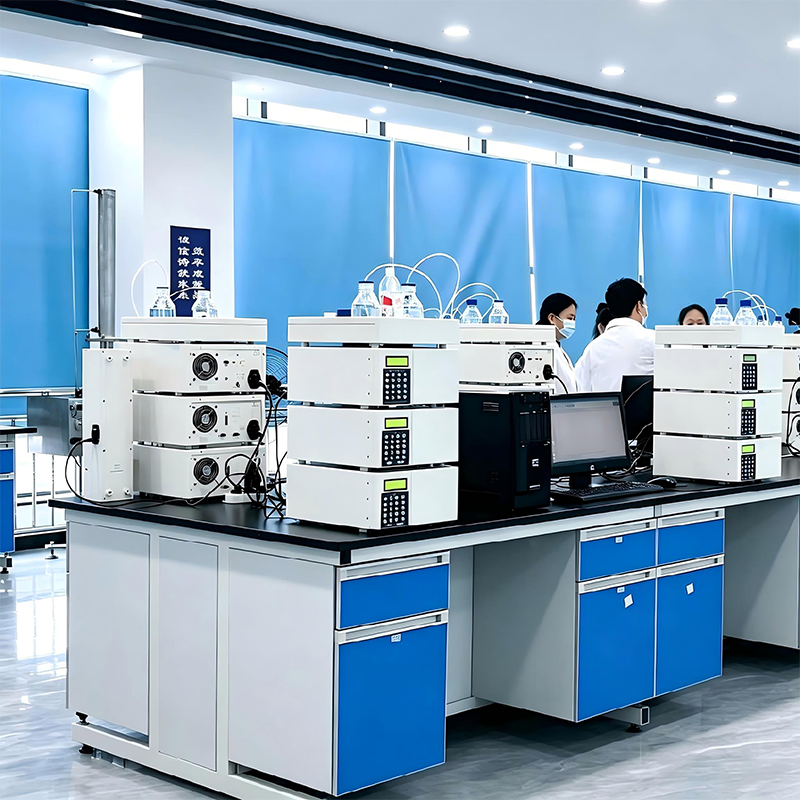
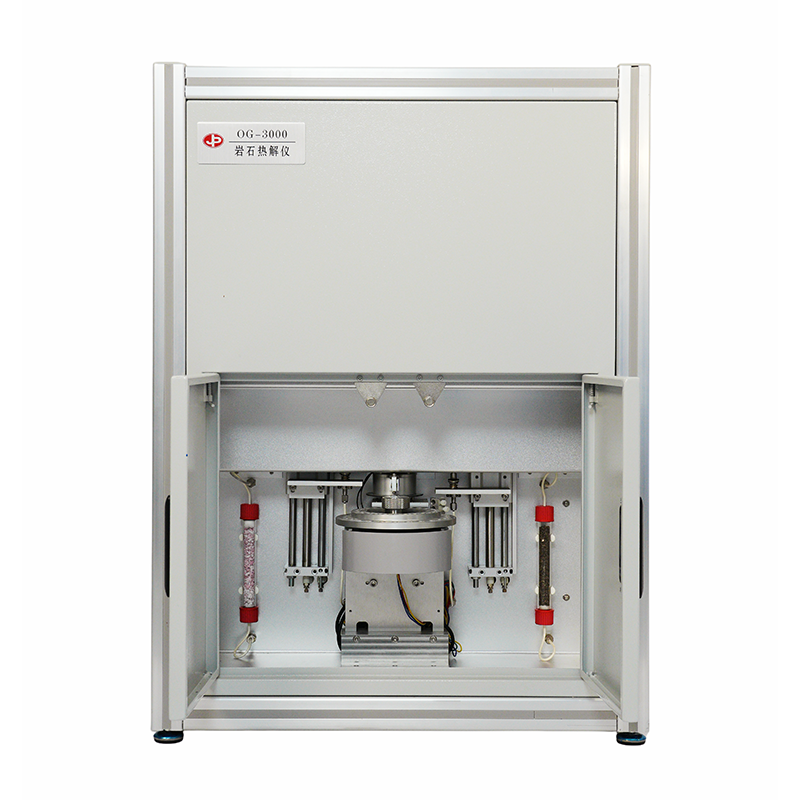
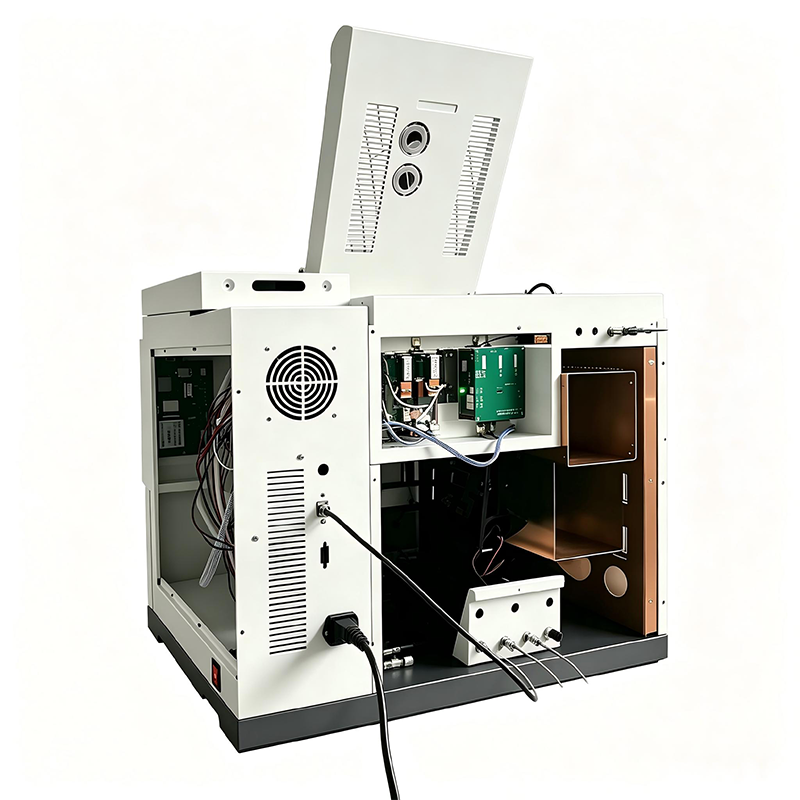
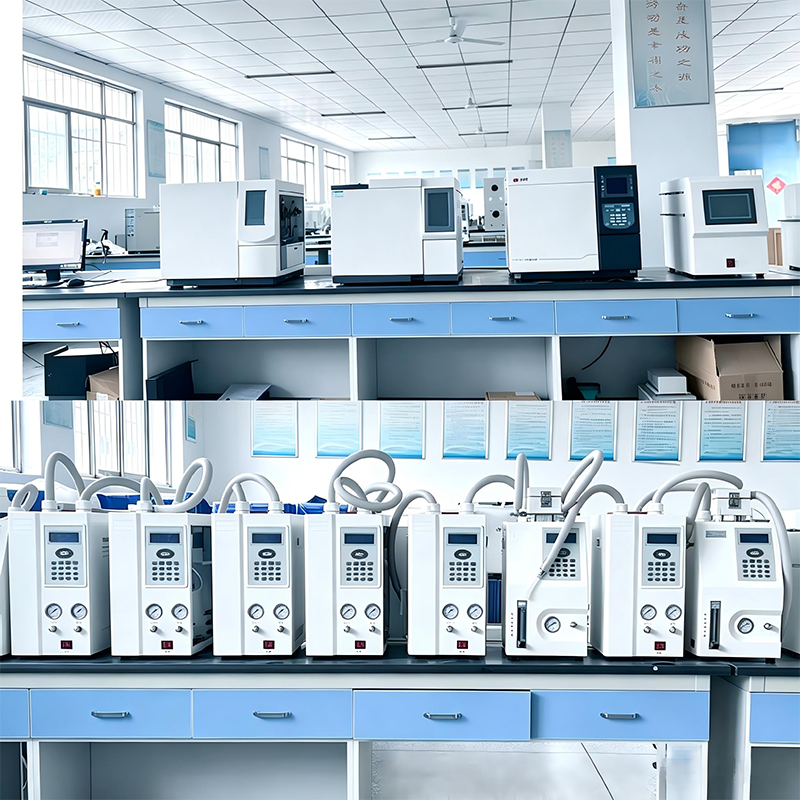


OG-2000V device for assessing oil and gas shows
Operating principle and purpose Under programmed heating conditions, a rock sample is heated, which leads to the evaporation of hydrocarbon components, as well as the pyrolysis of kerogen and high-molecular resinous-asphaltene substances with the formation of hydrocarbons. Using flame ionization...
Description
marker
Operating principle and purpose
Under programmed heating conditions, the rock sample is heated, which leads to the evaporation of hydrocarbon components, as well as the pyrolysis of kerogen and high-molecular resinous-asphaltene substances with the formation of hydrocarbons. Using a flame ionization detector (FID), three peaks are quantitatively recorded - S₀, S₁, S₂ and the Tmax parameter, or five peaks - S₀, S₁, S₂₁, S₂₂, S₂₃, as well as a number of derived parameters. The residual organic matter in the sample after pyrolysis is oxidized by heating to CO₂, which is then catalytically reduced to CH₄ in the presence of hydrogen and quantified by FID as the S₄ peak. Based on the data obtained, the total organic carbon (TOC) content of the sample is calculated, which allows for rapid assessment of the source potential, degree of maturity, type of organic matter of source rocks, as well as the content and composition of hydrocarbons in reservoir rocks. The analysis results fully comply with the requirements of state standards.
Device contents
The main block of the rock pyrolyzer: performs two functions - pyrolysis and determination of residual carbon; allows for analysis with registration of three and five peaks.
Workstation for data processing; data acquisition board and interpretation and evaluation software; automatic printing of analysis results.
Electronic scales: accuracy 0.0001 g, maximum load 110 g
Gas supply: high purity nitrogen cylinder, hydrogen generator, air generator.
Computer: at least the following configuration - dual-core 2.0 GHz processor, 1 GB RAM, 500 GB HDD, CD-RW drive, 19" LCD monitor, laser printer.
Supply of all gas lines, valves, pipelines necessary for installation of the device, as well as standard samples and consumables to ensure operation.
When working in the field, a voltage stabilizer and an uninterruptible power supply are required.
Main functional and technical characteristics
1. The main unit of the device provides two functions: rock pyrolysis and determination of residual carbon.
2. Pyrolytic analysis: the ability to select the registration mode of three or five peaks.
3. Sample injection system with one pneumatic cylinder, providing high injection reproducibility.
4. Highly sensitive dual FID detectors are used for both pyrolysis and residual carbon determination.
5. Microcurrent amplifier detector:
Minimum detectable amount of hydrocarbons: 0.001 mg hydrocarbons/g rock;
Zero line drift: <0.1mv/30min;
Linear range: 10⁶.
6. Temperature controllers:
FID temperature maintenance accuracy: 360 ± 1 °C;
Accuracy of maintaining the temperature of the pyrolysis furnace: 600 ± 1 ° C; on request it is possible to adjust the cycle to 800 °C;
Accuracy of maintaining the temperature of the oxidation furnace: 600 ± 1 ° C;
Number of programmable heating cycles during pyrolysis: 4 (for source rocks, reservoir rocks, thermal modeling and custom cycle);
Programmable heating non-linearity: <0.5/min℃;
Maximum pyrolysis temperature: up to 800 °C (optional); minimum heating rate: <1℃/min;
function to display the current temperature in real time.
7. Meets the requirements of the GB 18602-2012 standard “Pyrolytic analysis of rocks”.
contact us
Related Popular Products

Device ZRJ-1 for determining the tendency of coal to spontaneous combustion
Product Description The ZRJ-1 device is a specialized gas chromatography...

Liquid chromatograph LC-4000B
Main features of the LC-4000 B pump - high precision, stability and efficiency...

Portable chromatograph GC-8890SD PLUS for the analysis of gases dissolved in transformer oil
Main features The device is made according to a classic three-detector design and allows...

Two-stage thermal desorber with automatic sample injection JX3
Product Description JX3 is a sample preparation device that uses...

Portable chromatograph for firedamp analysis of Shandong Jinpu Company
Product Description Portable firedamp chromatograph is the latest...

Gas chromatograph GC-7890SD for the analysis of gases dissolved in transformer oil
General information The GC-7890SD chromatograph is equipped with a highly sensitive heat detector...

Liquid Autosampler JP-AS3020A
Product Description JP-AS3020A is a new automatic sampler...

JP-72A Fully Automatic Intelligent Headspace Sampler
Product Description JP-72A Fully Automatic Intelligent Sampler for...

Evaporator for liquid hydrocarbons JPSZ-2
Operating conditions This device must be placed in a fume hood. Resist...

Device ZRJ-2 for determining the tendency of coal to spontaneous combustion
Product Description The device complies with the requirements of the GB/T 20104-2006 "Method of...

CS996 Infrared Carbon and Sulfur Analyzer
Description of the device Infrared carbon and sulfur analyzer model CS996 complete with...

Multi-functional automatic sampler for gas chromatograph JP-AS160
Product Description JP-AS160 is a cost-effective automatic sampler...

Portable chromatograph for firedamp analysis of Shandong Jinpu Company
Main features The device is made according to a classic three-detector design and allows...

Two-stage thermal desorber JP-50
Product Description Number of test tube positions: 50 JP-50 is...

JP-42A Fully Automatic Intelligent Headspace Sampler
Product Description JP-42A Fully Automatic Intelligent Sampler for...

JPZD6001 Multifunctional Fully Automatic Vibration Analyzer
Operating modes 1. Degassing for chromatography: temperature 50 °C; shaking 20 min;...


