


Products
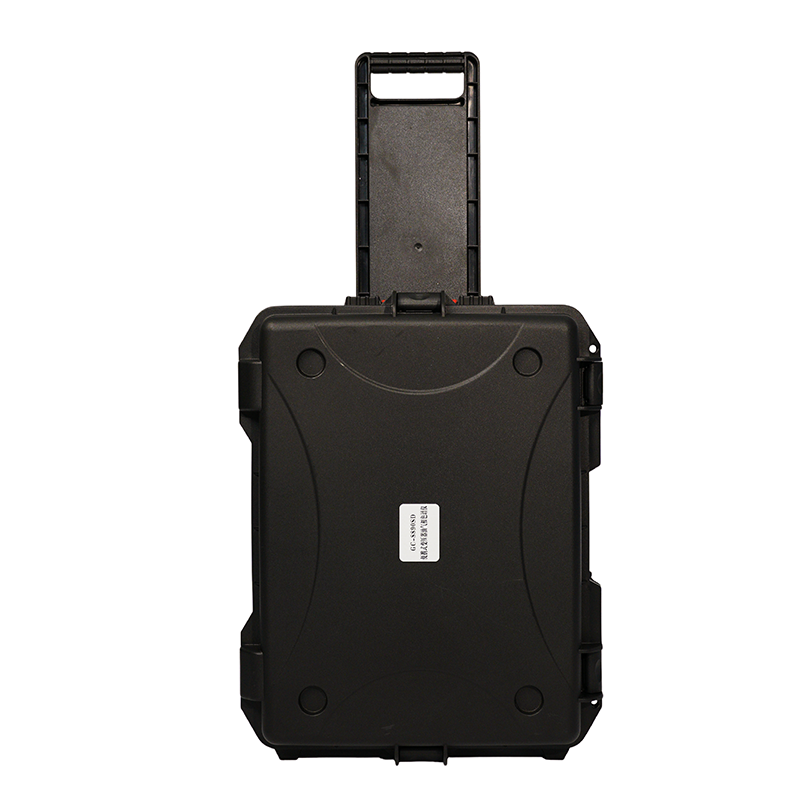
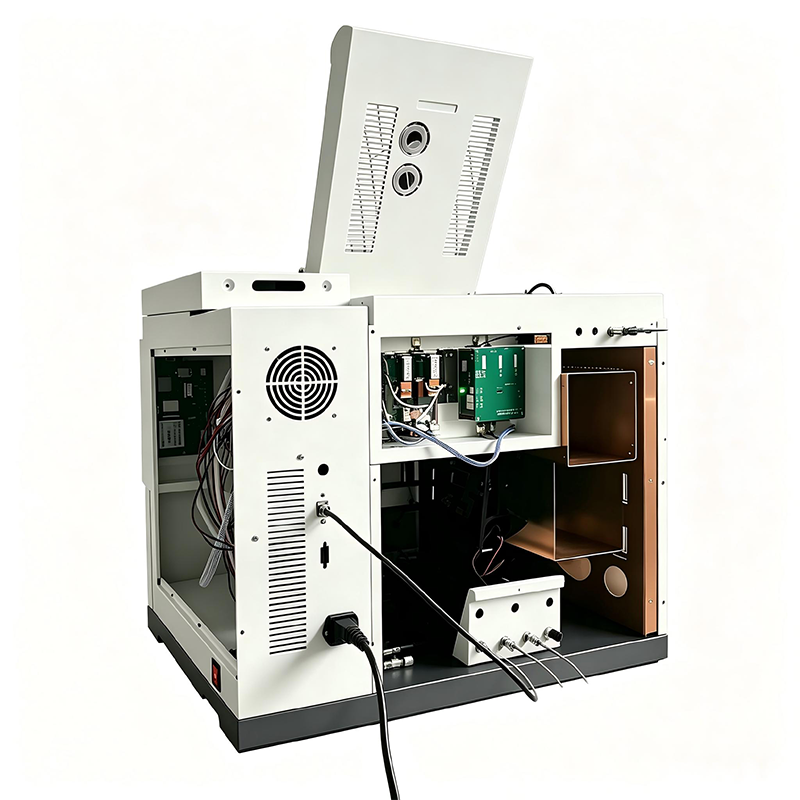
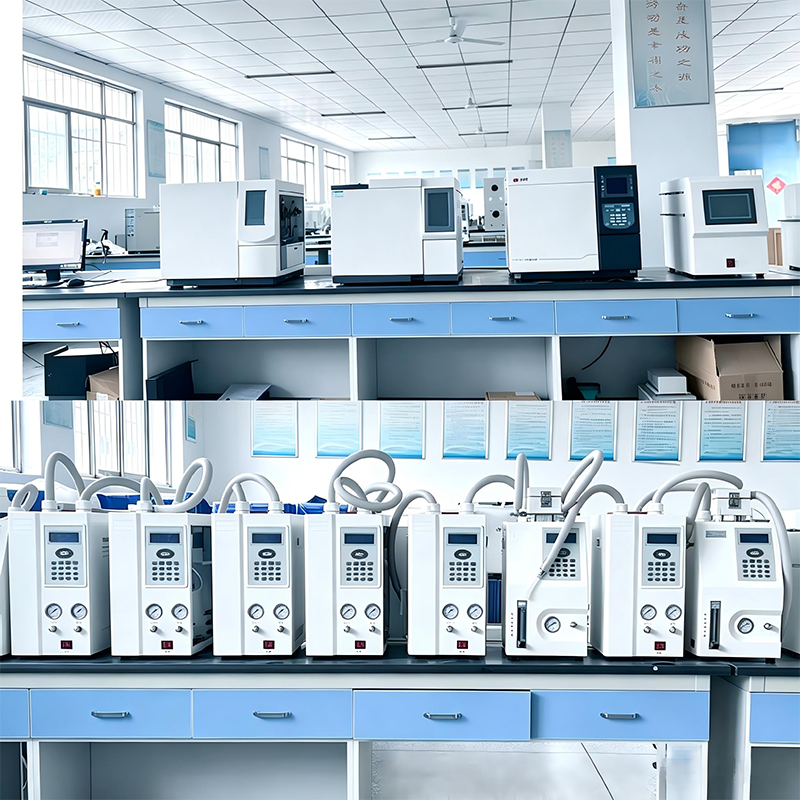


Portable chromatograph for firedamp analysis of Shandong Jinpu Company
Main features The device is made according to the classic three-detector scheme and allows, with one sample injection, to perform a complete analysis of multicomponent gas mixtures, including H₂, O₂, N₂, CO, CO₂, CH₄, C₂H₆, C₂H₄, C₃H₆, H₂S. The results of the analysis are fully consistent with the data obtained at the hospital...
Description
marker
Main Features
The device is made according to a classic three-detector design and allows for a single sample injection to perform a complete analysis of multicomponent gas mixtures, including H₂, O₂, N₂, CO, CO₂, CH₄, C₂H₆, C₂H₄, C₃H₆, H₂S. The results of the analysis fully correspond to the data obtained on stationary laboratory chromatographs. Thanks to its compact modular design, the device has small dimensions and weight, which makes it easy to transport and carry out analysis directly on site. This allows you to obtain data in a timely and accurate manner with significant savings in labor and material resources. According to the results of tests carried out by the Shandong Institute of Metrology, the device meets the world level in all main characteristics.
Functional Features
1. Fully microprocessor control via touch screen
Supports four-zone temperature control and real-time control of carrier gas flow; digital temperature setting, detector control and overheating protection are implemented.
2. Network management
Built-in 10/100 Mbit/s Ethernet communication technology with automatic negotiation, allowing you to connect devices into a local network with high data exchange efficiency and ensuring data transfer over a remote distance.
3. Multi-detector circuit
With one sample injection, H₂, O₂, N₂, CO, CO₂, CH₄, C₂H₆, C₂H₄, C₃H₆, H₂S and other components are simultaneously determined.
4. Adopting advanced logarithmic amplifier technology.
5. Automatic protection. When pressure or flow goes beyond the established limits, the bridge current is automatically switched off.
6. Automatic flow display and control (EPC)
Electronic flow sensors provide accurate display of carrier gas flow and automatic control of all gas parameters.
7. Memory function
In the event of a power failure or momentary disturbance, control parameters are automatically saved and restored.
8. Protection and self-diagnosis functions
In the event of a short circuit, breakage of the platinum thermal resistance, or excessive temperature, the heating is automatically turned off, indicating the location and type of fault.
9.Easy to operate
Convenient setting of parameters; Everyday use requires only minimal steps to turn the device on/off.
10. Smart start
Built-in touch trigger technology improves retention time accuracy.
11. All components of the device are miniature and housed in a case with a retractable handle, which makes it easy to transport and work in the field.
12. Two power supply methods - AC and DC. Powered by a lithium battery provides up to 8 hours of continuous operation (optional, upon customer request).
Specifications
1.Minimum detectable concentrations (µL/L):
| CO | (O₂) | (N₂) | CO₂ | CH₄ | C₂H₄ | C₂H₆ | C₂H₂ | C₃H₆ |
| 5 | 10 | 20 | 10 | 0.1 | 0.1 | 0.1 | 0.1 | 0.1 |
2. Retention time reproducibility: deviation ≤ 3%.
3. Reproducibility by quantitative determination: deviation ≤ 3%.
4. Control mode: industrial computer (IPC).
5. Number of temperature zones: 6.
6. Temperature control range: from room +4 °C to 450 °C.
7. Temperature maintenance accuracy: ±0.05 °C.
8. Programming the temperature of the speaker thermostat: ≥ 20 steps.
9. Programming the sample injection temperature: ≥ 7 steps.
10. Overall dimensions: 450 × 430 × 230 mm.
11. Weight: 20 kg.
Workstation
The specialized chromatographic workstation is developed on the Windows platform; its diagnostic algorithms fully comply with the requirements of current state standards. Equipped with a 24-bit high-precision USB data acquisition board. Input signal range: from –2 to +2 v, resolution – 1 uv.
Main functionality:
1. Automatic triggering on input peak: automatic switching on of the workstation and chromatograph based on the signal of the sample input peak.
2. Data management: saving analysis results with classification by equipment type; support for equipment information management.
3. Flexible report printing: support for both fixed and user-configurable templates.
4. Automatic fault diagnosis: support for functions of exceeding threshold values, three-component diagnostics (triad) according to GOST, TD diagram, graphs of component concentrations, David's triangle (explosion safety) and other methods.
5. Automatic identification and calibration: support automatic or manual editing of the peak identification table; automatic calculation of calibration coefficients with averaging of the results of multiple calibrations.
6. Trend analysis: visual display of the dynamics of changes in the concentrations of each component based on historical data.
7. Processing of chromatograms: functions for leveling the baseline, splicing (overlaying) chromatograms and others.
8. Real-time bidirectional communication: support full reverse control (reverse control), network control and instrument digital interface.
9. Open data management system: complete preservation of information about equipment and analysis results; support for adding, modifying, deleting, searching, sharing and integrating with other database management systems.
10. Flexible Peak Identification and Processing: Ability to customize parameters, time programs, or manual adjustments to identify, remove peaks, and adjust baselines to ensure accurate analysis results.
contact us
Related Popular Products

OG-2000V device for assessing oil and gas shows
Operating principle and purpose Under conditions of programmed heating, a rock sample...

Portable chromatograph GC-8890SD PLUS for the analysis of gases dissolved in transformer oil
Product description The device is made according to a classic three-detector design and allows...

JPF3000 Fully Automatic Trace Water Analyzer
Features of the device 1. Equipped with a 7-inch high-resolution color touch screen...

Evaporator for liquid hydrocarbons JPSZ-2
Operating conditions This device must be placed in a fume hood. Resist...

Double pump system
Main features Rich functionality - corresponds to various analytical...

Automatic gas sampler GAS-10A
Description and purpose of the device GAS-10A is an automatic intelligent...

Electronic analytical balance FA1004B
Product Description FA series electronic analytical balances are designed using...

Gas chromatograph GC-7890 with touch screen
Main functional features 1. Large format liquid crystal display with...

High performance packed chromatography columns
Description of the device The packed column is a chromatographic column,...

Two-stage thermal desorber JP-50
Product Description Number of test tube positions: 50 JP-50 is...

Fully automatic two-stage thermal desorber JPS-6300
Product Description The fully automatic two-stage thermal desorber features...

Portable chromatograph GC-8890SD for the analysis of gases dissolved in transformer oil
Main features The device is made according to a classic three-detector design and allows...

High performance capillary chromatography columns
Product Description Capillary column is a key gas separation element...

Multi-functional automatic sampler for gas chromatograph JP-AS160
Product Description JP-AS160 is a cost-effective automatic sampler...

Hydrogen generator JPH-300E
Description of the device The JPH-300E hydrogen generator consists of an electrolysis cell, a pulse...

Automatic headspace sampler AHS-6890
Purpose and areas of application The sampler for headspace analysis is...


