


Products
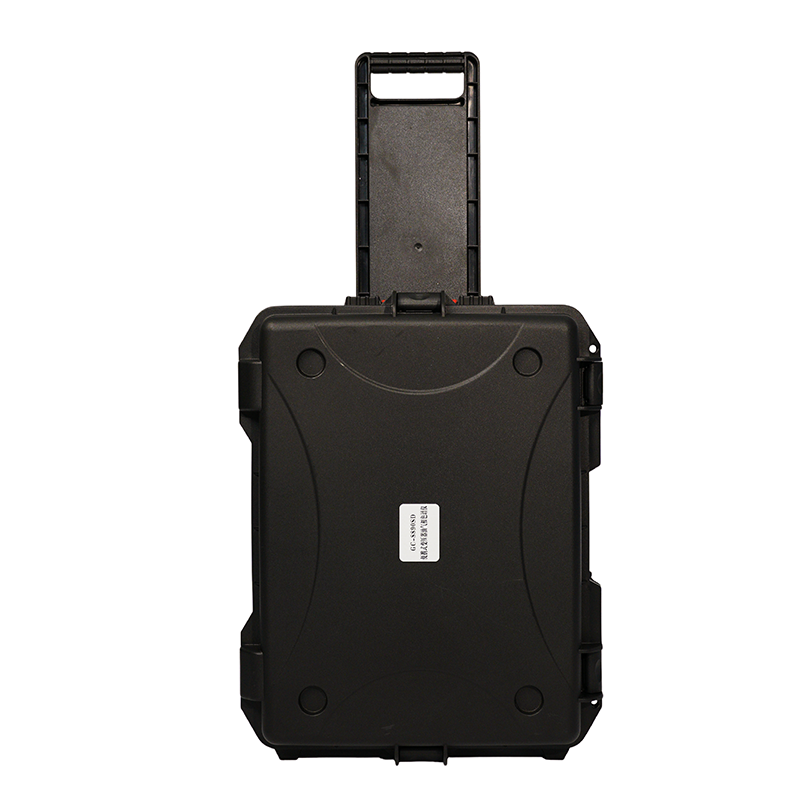
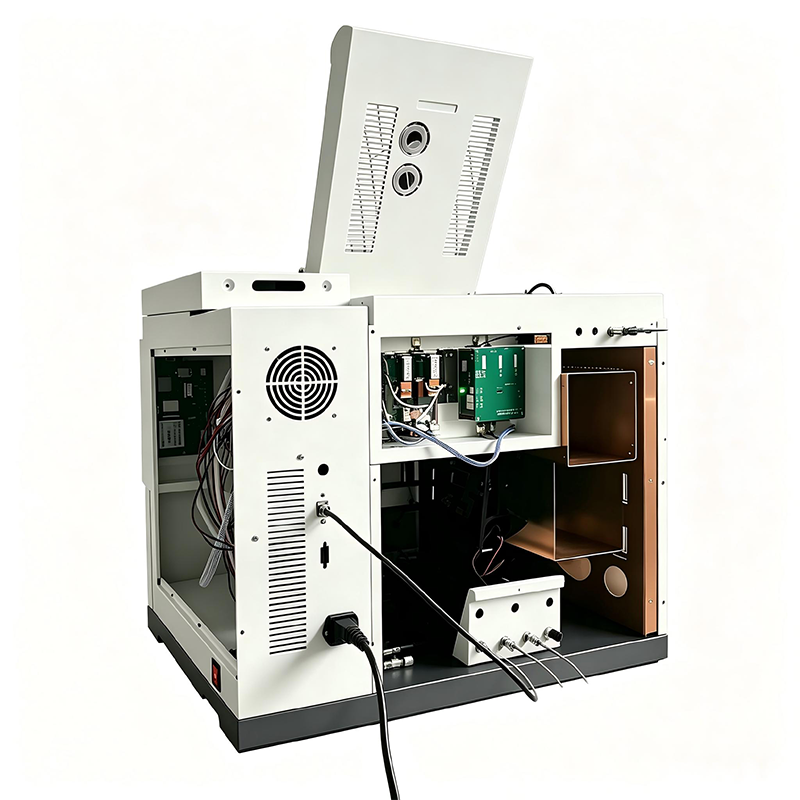
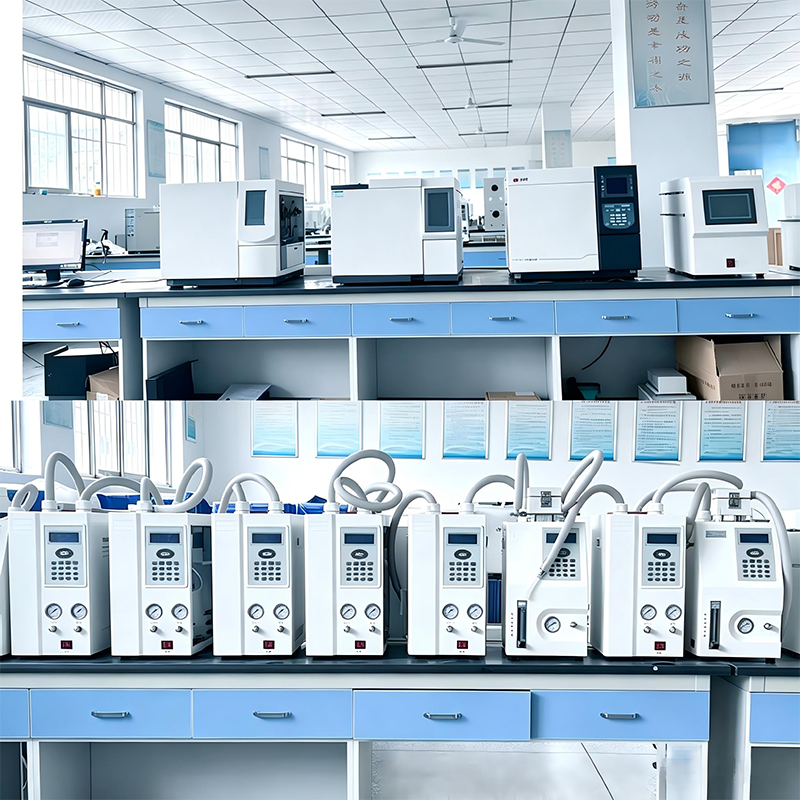


Gas chromatograph GC-7890SD for the analysis of gases dissolved in transformer oil
General information The GC-7890SD chromatograph is equipped with a highly sensitive thermal conductivity detector, two flame ionization detectors and a nickel catalytic converter (methanizer). The device allows you to completely determine the content of 7 (or 9) gas components in one sample injection...
Description
marker
General information
The GC-7890SD chromatograph is equipped with a highly sensitive thermal conductivity detector, two flame ionization detectors and a nickel catalytic converter (methanizer). The device allows, in one sample injection, to completely determine the content of 7 (or 9) gas components dissolved in transformer oil, including: hydrogen (oxygen, nitrogen), carbon monoxide, carbon dioxide, methane, ethylene, ethane, acetylene. In this case, H₂ is detected using TCD; CO, CO₂, CH₄, C₂H₄, C₂H₆ and C₂H₂ - using FID.
Chromatogram plot of reference samples

Minimum detection concentration (V/V; ppm) ul/l
| Gas component | Minimum Detection Concentration | Equipment | Qty |
| H₂ | ≤ 2 | Main unit GC-7890SD (with chromatography columns) | 1 |
| C₂H₂ (hydrocarbons) | ≤ 0.1 | Dedicated chromatography workstation | 1 |
| CO | ≤ 1 | Standard gas mixture | 1 |
| CO₂ | ≤ 5 | Gas supply (high purity N₂, H₂, air) | 1 each |
| O₂ | ≤ 10 | Shaking device (degasser) | 1 |
| N₂ | ≤ 20 | Computer, printer | 1 each |
Specifications
1.General parameters
Overall dimensions: 565 × 505 × 500 mm (length × height × width).
Packing box dimensions: 730 × 650 × 610 mm (length × height × width).
Chromatography columns: two specialized analytical columns.
Device weight: 65 kg.
2.Temperature regulation
Column temperature:
From room temperature plus 6 °C to 350 °C (adjustable in 1 °C steps),
(the upper limit of the adjustable parameter can reach 399 °C; this setting is available to the user, but does not guarantee compliance with the technical specifications).
Temperature fluctuations: no more than ±0.1 °C; (when the ambient temperature changes by 10 °C or the supply voltage by 10%).
Temperature gradient: ±1% (temperature range 100°C to 350°C).
Program heating: number of steps - 7.
Heating rate: 0 to 40 °C/min (adjustable in 0.1 °C increments).
Cooling speed: the cooling time of the chamber from 200 °C to 100 °C does not exceed 3 min.
TCD temperature control
Temperature from room temperature plus 20 °C to 350 °C (nominal parameters).
(The upper limit of the adjustable parameter can reach 399 °C; the user can use this setting, but the specifications are not guaranteed.)
Temperature control accuracy: no more than ±0.1 °C.
Other heating zones:
Temperature from room temperature plus 20 °C to 350 °C (nominal parameters).
(The upper limit of the adjustable parameters can reach 399 °C; the user can use this setting, but the specifications are not guaranteed.)
Temperature control accuracy: no more than ±0.2 °C.
3.FID detector
Detection limit: ≤ 3×10⁻¹² g/s (for n-hexadecane).
Noise: ≤ 3×10⁻¹⁴ A.
Drift: ≤5×10-13A/30min.
Linear dynamic range: ≥ 10⁶.
4.TCD detector
Sensitivity: S≥3000mv.ml/mg (for n-hexadecane/isooctane).
Zero line noise: ≤20uv.
Zero line drift: ≤50uv/30min.
Linearity: ≥ 10⁵.
Carrier gas flow stability: ≤ 1%.
5. Operating conditions
Ambient temperature: from 5 to 35 °C.
Relative humidity: no more than 85%.
Supply voltage: 220 V ±10%.
Power frequency: 50 ±0.5 Hz.
Maximum power consumption: 2500 W.\
Dedicated workstation for GC-7890
The workstation is developed on the Windows platform and fully complies with the requirements of current state standards for fault diagnosis. Equipped with a 24-bit high-resolution USB data acquisition board. Input signal range: from –2 to +2 v, resolution – 1 uv.
Main functionality:
Automatic start: automatically turns on the workstation and chromatograph based on the sample injection peak signal.
Data management: Save analysis results by equipment category for easy retrieval and management.
Flexible report printing: support for both fixed and user-configurable print templates.
Intelligent diagnostics: threshold functions, three-component diagnostics, TD diagram, component concentration plot, David's triangle and other fault analysis methods.
Automatic identification and calibration: editing the peak identification table, automatic calculation of calibration coefficients and averaging of multiple calibration results.
Trend analysis: visually displays the dynamics of changes in the concentrations of each component based on historical data.
Chromatogram processing: baseline correction, chromatogram splicing (overlay) and other functions for efficient and standardized data analysis.
contact us
Related Popular Products

Fully automatic two-stage thermal desorber JPS-6300
Product Description Fully automatic two-stage thermal desorber features...

JP-20A Headspace Sampler with Large Format Digital Display
Product Description Number of positions for bottles: 12. JP-20A is equipped with a complete...

Portable chromatograph for firedamp analysis of Shandong Jinpu Company
Main features The device is made according to a classic three-detector design and allows...

Two-stage thermal desorber JP-30
Product Description Number of test tube positions: 30 JP-30 is...

High performance packed chromatography columns
Description of the device The packed column is a chromatographic column,...

JP-42A Fully Automatic Intelligent Headspace Sampler
Product Description JP-42A Fully Automatic Intelligent Sampler for...

CS996 Infrared Carbon and Sulfur Analyzer
Description of the device Infrared carbon and sulfur analyzer model CS996 complete with...

JP-72A Fully Automatic Intelligent Headspace Sampler
Product Description JP-72A Fully Automatic Intelligent Sampler for...

JPBS3000 Fully Automatic Closed Cup Flash Point Analyzer
Features of the device 1. Equipped with a 7-inch high-resolution color touch screen...

723N Visible Spectrophotometer
Description of the device This device is a cost-effective analytical spectrophoto...

Gas chromatograph GC-8890SD for the analysis of gases dissolved in transformer oil
General GC-8890SD is a high-performance network chromatograph...

Liquid chromatograph LC-4000B
Main features of the LC-4000 B pump - high precision, stability and efficiency...

Visible spectrophotometer 721
Description of the device This device is widely used in various fields, including medicine...

High performance capillary chromatography columns
Product Description Capillary column is a key gas separation element...

JP-301Q Fully Automatic Chromatograph for Analyzing Gases Dissolved in Transformer Oil
Product Description JP-301Q is an intelligent system that integrates...

OG-2000V device for assessing oil and gas shows
Operating principle and purpose Under conditions of programmed heating, a rock sample...


